

Gastric sleeve surgery (also known as sleeve gastrectomy) was originally the first part of a ‘staged’ gastric bypass surgery. Surgeons used a ‘staged’ approach for super morbid obese patients (extremely overweight). Instead of performing an entire gastric bypass surgery, surgeons would perform the first part of the procedure, reducing the size of the stomach. And then 18 months later when the patient had lost significant amounts of weight, the second part of the procedure would be performed. This would reduce the overall risk to the patient during surgery.
So surgeons stapled about 75% of the patient’s stomach with the intent to return after some weight was lost and finish the procedure in about a year and a half. 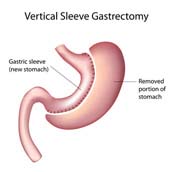 Surgeons started noticing something alarming. Many patients lost more than 50% of excess weight within a year and both the surgeon and patients decided to not perform the second half of the procedure. Long term follow-up showed that these patients were able to keep the weight off. Similar results were seen and soon gastric sleeves became a primary treatment for weight loss.
In fact, the surgery was much easier than a gastric bypass and the patients typically lost more weight than they would with a Lap Band.
The benefits of gastric sleeve surgery are:
- You will lose weight.
- It will reduce hunger.
- No dumping syndrome.
- No adjustments and minimal follow-up.
- The stomach may stretch slightly over years.
- Quick surgery time, similar to gastric bands.
- No implanted band.
- Its not reversible.
- Excellent resolution of comorbidities related to morbid obesity.
How Gastric Sleeve Surgery Works
Gastric Sleeves, also commonly called sleeve gastrectomies or stomach stapling, are restrictive procedures only. They restrict the amount of food you can eat in one sitting. They do this by reducing the size of your stomach. This procedure is typically done laparoscopically. This means the surgeon will make 5 small incisions ranging from 5 mm to 15 mm in the patient’s abdomen. Trocars are inserted into these incisions which allow the surgeon to insert instruments and a scope into the patients abdomen.
The stomach is stapled, leaving a tube shaped structure. This is referred to as the sleeve. About 75% of the stomach is removed.
- It reduces hunger by eliminating part of the stomach that produces a hunger hormone, ghrelin.
- About 75% of your stomach is removed by stapling. This restricts the amount of food a patient can consume in a single sitting.
- Studies show about 60% excess weight loss from gastric sleeve surgery.
Laparoscopic sleeve gastrectomies, like gastric bands, can lead to a poor result if you eat many snacks throughout the day. However, its thought to create more weight loss because the patient does not feel the same hunger that a gastric band patient continues to feel. Because of this, some experts feel that this procedure is superior to Lap Band surgery.
Amount of Weight Loss from Gastric Sleeves
While this procedure is relatively new, initial studies show that weight loss is greater than gastric bands but less than gastric bypass or duodenal switch surgery.
- 1 year: 30% to 50% excess weight loss.
- 2 years: 60% to 70% excess weight loss.
- 3 years: Around 70% but not enough clinical data.
How much will you weigh after gastric sleeve surgery?
Did You Know?
If dietary guidelines are not followed, it is possible to regain weight after significant weight loss.
More Information
Who it’s for:
All weight loss surgeries should only be considered after other options have been tried and failed. Laparoscopic gastric sleeve surgery is a major surgery that carries significant risks. This includes a low but real risk of death. Sleeves are perfect for someone that wants a minimally invasive procedure and significant weight loss but does not want a long-term implant or the follow-up visits for adjusting gastric bands.
Does it work?
- Yes.
- It often cures Type 2 diabetes, sleep apnea, hypertension, and other obesity related illnesses.
Complications from laparoscopic sleeve gastrectomies:
Complications rates from surgery appear to be low but can be serious. Some of the more serious complications can include:
- A leak along the staple line. This is serious and often requires immediate re-operation.
- Excessive bleeding.
- Infection.
- Injury to the liver or spleen.
How much does it cost?
Gastric sleeve surgery is typically covered by insurance. However, not all policies include coverage for weight loss surgery. Fortunately, the growing popularity of this procedure has increased competition which, in turn, has decreased the cost of the procedure. Our 2018 survey showed the cost of gastric sleeve drop almost 10% compared to 2012.
Conclusion
Weight loss surgery can extend the length and quality of life for morbidly obese individuals. The surgery does carry risks which need to be considered carefully. Gastric sleeve surgery, and any weight loss surgery, is a stepping stone. The surgery alone will not change your life. It will get your weight down to a place where it becomes easier to exercise, eat properly, and have hope. It’s up to you to continue taking steps. It’s up to you to implement healthy habits. It’s up to you to act, change, and live the life you want.